Thursday, December 07, 2006

An Unlikely Alternative

Iraq is a mess. I think we’ve finally reached the point where everyone concedes that things really aren’t going well. I’ve been thinking a lot about any possible solution out of this problem for the US and the only thing that I could come up with is a solution that no American President would support (and I don’t know if I would even do it myself if I were President), but it’s the only thing I can think of to make a horrible solution at least a little less so.


The problem, as I see it, is that we’re losing the war in Iraq and it doesn’t look like it’s going to get any better no matter how many troops or money we throw at it. Some argue that we should just pull out of the region altogether. Since we’re not helping things anyway, maybe we should just cut our losses and head home. We would be leaving a mess behind, but at least there wouldn’t be anymore US lives and taxpayers’ money lost. The problem with that argument, as I see it, is that while things are really bad now, the US pulling out immediately could make things a lot worse. Not only would al Qaeda set up shop, but Iran and Syria would begin to move in leaving a very unstable region even more so. Where does that leave us? Staying the course is a waste of time, money, and, most importantly, human life, but leaving would likely set in motion a course of events that would necessitate renewed US involvement in the region at some point in the future.


Let’s face it: going to Iraq was a really bad idea. In the interest of full disclosure (and at the risk of sounding like John Kerry), I actually half-supported the war during a period well before the US actually went into Iraq. In the summer of 2002 when Colin Powell had convinced the US to plead the case before the United Nations, I thought that they may be doing the right thing. However, when the UN refused its support, I was completely against the invasion. I supported the idea of a US-led UN operation in Iraq (something akin to the Korean War), but a unilateral preemptive strike sounded like a terrible idea to me. Even if the war had been won as easily as President Bush had thought, I felt that unilateral action by the US would set a bad precedent in the international system. Just because we have the military, financial and political power to do something, it doesn’t necessarily mean that we should actually do it. And if we go around toppling regimes that we don’t like, what’s stopping China or Russia or Iran from doing the same?


So my advice is based on the premise that going to war was a huge mistake in the first place. I think that President Bush should go on national television (which, in effect, means going on international television) and tell the world that he was wrong and that the rest of the world was right and the US should have never gone into Iraq. And at the same time, he should remind the world that although the greatly increased instability in the region is our fault, it’s now become the world’s problem, and in order to overcome this problem, we need to work together to try to find a solution. Stability in the Middle East is in everyone’s interests and the only way of bringing any real stability to the region would be to form a truly international coalition (the US, the UK, Latvia and Estonia don’t count) that could provide the military, financial and logistical support that is needed. This is potentially too large and important a problem to just hand the reigns over to the Iraqis in a year’s time. Nothing against the Iraqi security forces, but clearly they’re no match for al Qaeda, Iran and Syria combined. I obviously don’t know the military steps that would need to be taken to secure the country, but I do feel pretty confident that the plans that are on the table at the moment aren’t going to do the trick. If we were able to involve the EU, China, Russia, the Saudis, Brazil and other large and small states around the world, maybe we could devise a plan and accumulate the military and financial support that would be necessary to actually turn Iraq into a stable country.


I know, it’s never going to happen. No US President would ever admit that the US ever did anything ill-conceived, but honestly, I can’t think of any way around it. I think that if we begin to treat other nations as partners and equals, instead of small children, not only could we solve the problem in Iraq, but we could also prevent US international hegemonic decline, which, in my opinion, is very imminent. (I hope to get the time to write an entry on that point shortly.)

Saturday, December 02, 2006

Game Theory

OK, I know I'm a little late and it's been out for quite some time, but I just listened to The Roots's lastest album -- Game Theory -- and it's hot! It usually takes me a little time to warm up to a CD, but I was a big fan of this one from the very first time I listened to it. While I'll have to take some time before I'm ready to commit to the following statement, this may very well be their best album -- dare I say -- even better than Things Fall Apart and Illadelph Halflife.

I don't know if y'all caught it, but I'm loving the sample of Radiohead's Amnesiac album in the Atonement track.

Quality.

Friday, December 01, 2006

Still No Cure

World AIDS Day 2006

Please take a moment to reflect on our fallen brothers and sisters, both at home and abroad, and the children of the world that they have left behind.

Thursday, November 30, 2006

Again... no comment

I just finished reading President Ahmadinejad's letter to the people of the US. Although the Bush Administration has dismissed the letter as "transparently hypocritical", I think it's still worth a read. I'm not saying that I agree or disagree with anything President Ahmadinejad says, but I do find it interesting.

Follow the link to his blog on the right of the screen if you're interested.

Wednesday, November 29, 2006

In response...

...to the comment I received in my previous posting:

First, thanks for your comments. I love to read what other people have to say about topics that I find interesting.

I agree with you that the Americans have the right to purchase and possess fire arms. It's clearly stated in the Constitution. My argument, however, (although not explicitly stated in the original entry) is that maybe owning a gun isn't a right that people should have. It made sense when the threat of British soldiers was on everyone's minds back when the Constitution was drafted, but nowadays, I would assert that it causes more trouble than it’s worth. I concede that there have been many instances in which law-abiding citizens have protected themselves and their families from danger through the possession of a firearm, but that number is dwarfed by the number of people that have been killed due to the fact that it is legal to possess weapons in this country. Guns are potentially dangerous and it takes a level of maturity and training and soundness of mind to ensure that guns aren’t used for malicious ends. The problem, however, is that the ease at which one can obtain a gun is in direct contrast with the level of responsibility one should take on when issued such a potentially dangerous weapon. Ultimately, if everyone who was issued a gun were responsible enough to make sure that kids didn’t get a hold of it or that it didn’t end up in the hands of criminals, I would feel a lot more comfortable with people exercising their “right” to possess firearms. The problem is that many people don’t fully appreciate the gravity of the decision they have made to obtain a gun, and, as a result, guns that have been obtained legally through rights guaranteed under the 2nd amendment go onto murder innocent (and also not so innocent) people.

Furthermore, I wholeheartedly stand by my assertion that I would rather be robbed by a person wielding a paintball gun than a person in possession of a real gun. Obviously, robbing someone is a crime and is scary and is something that no one should have to experience. However, given the fact that people do in fact get robbed, getting robbed with a toy gun is clearly preferable to getting robbed with a real gun because at least with a toy gun, there’s no chance that you’ll lose your life along with your wallet, even if you don’t know that it’s a toy gun pointed at your back at the time.

Banning paintball guns isn’t going to stop people from getting robbed. If someone has made up his mind to rob you, not having had the opportunity to stop at Walmart to pick up a paintball gun isn’t going to stop him.

But again, thanks for you comment. I’m sure there are many things that I write in this blog that people don’t agree with. I’d love to hear from you.

Sunday, November 26, 2006

Is anyone else as worried as I am?

Has the United States become an overly militarized state right under our noses? I fear that the answer may be yes.

I was home in Baltimore this weekend for Turkey Day and I happened to glance at a copy of the Baltimore Examiner , in which the headline read "Bill aims to outlaw paintball, BB, pellet guns in Baltimore" The Baltimore City Council is considering restricting the purchase and use of paintball and BB guns to licensed entertainment facilities and no longer allowing ordinary citizens to purchase them. The reasoning behind the bill is because these "toy" guns have been used to commit real crimes such as robberies. The irony in all of this is that instead of trying to get rid of toys that look like guns, shouldn't we be trying to get rid of real guns? If I'm going to get robbed on the street, I'd much rather the guy be holding a paintball gun instead of a real gun, so in case he gets nervous and pulls the trigger, I just have to buy a new jacket instead of spending the rest of my life in a wheelchair. I think most people would probably agree with that, but the notion of outlawing real guns isn't even an option. How did we get to the point when the individual right to carry a weapon overrides all appeals to collective security and the common good?

In another example of how American society has become overly militarized, the NYPD has yet again used excessive force against unarmed black men, using the "oh, I thought he had a gun" excuse (the NYPD seems to never get tired of using that one). NYPD fired 50 bullets, only half of which actually landed anywhere close to their intended targets. Has anyone thought that if normal citizens weren't allowed to walk around with guns, maybe cops would be a little less trigger happy? Not to take any blame away from cops because I'm sure everyone (including myself) has their issues with cops, especially the NYPD, but in such a militarized society in which anyone you meet could potentially have a concealed weapon, I could understand a cop being a little jumpy.

My concern, however, isn't limited to ease in which Americans can obtain firearms, but rather my concern extends to the militarized nature of our society as a whole. It would not be difficult to make the argument that the ridiculous amount our government spends on defense has just as much to do with economics as it has to do with actual defense. As proven by German militarization leading up to World War II and our own militarization during the same period, nothing jump starts an economy like gearing up for war. Upon emerging from WWII as the unquestioned western pole of a bi-polar world, the US was reluctant to sacrifice the economic gains reached through militarization, especially with the Soviets nipping at our heals. And even today, with the Soviet threat long gone, war and military build up continues to be one of the main drivers of our economy. I urge anyone who questions that assertion to look at the huge profits defense suppliers and contractors are making through various wars and military operations around the globe and the existence of, by some accounts, over 700 US military bases in over 40 countries. Not only is our society becoming very militarized, but we successfully project our bellicose culture abroad.(This could quite easily lead to a discussion of the false claim that the US has always been the "reluctant" imperialist, but I'll save that discussion for another time).

So I commend the Baltimore City Council in trying to lower crime in the city, but, unfortunately, I fear that the problem of violence in that city or any other across the nation goes much deeper than whether people are allowed to carry around paintball guns.

Thursday, November 09, 2006

Whew...That Was Close

At first, I was a little disappointed. After making a terrible, yet completely understandable, mistake 4 years ago, I thought that my home-state brethren were poised to make an even more egregious error. But, alas, my own lack of patience was the only fault of the evening.

When I powered up my computer Tuesday evening and looked up the election tallies, I was very worried that not only was Ehrlich going to remain the governer of Maryland, but his Lt. Governor was going to pass one of Maryland's Senate seats to the other side of the aisle. Fortunately, however, as more votes rolled in, Martin O'Malley (who I honestly don't really find very impressive)and Ben Cardin came through in the end. After a 4-year identity crisis, it's nice to see that Maryland has come back to its Democratic senses and ended its foolish experimentation with Republican politics.

All is now right with the world.

By the way, was anyone else caught off guard with Bush's sacking of Rummy? If anything, I would have thought he would have given him the axe before the election. Since so many people hated him, firing him before the election might have helped the Republicans a bit. Waiting until the day after is like Bush admitting that he was wrong all along, which is not something that I would have ever expected him to do.

Thursday, November 02, 2006

Ain't the Internet Great?

I just stole this from another blog. I felt the need to share:

Go to Google.com.

Type in “asshole” (in quotes).

Click the button, “I’m Feeling Lucky.”

...or you could just click here.

Sunday, October 22, 2006

Obama in '08??

Not owning a television makes it difficult for me to catch Meet the Press each week, but I just read in The Washington Post that Barack Obama announced on Meet the Press this morning that he is considering a run for the presidency in 2008. This is huge! A black man actually has a real chance of being the next President of the United States. People love this guy, but I don't really know much about him other than the fact that he's been holding it down in the Senate for Black America for the last 2 years. He's probably the one person that could give Hilary a real run for her money in the 2008 primaries. Don't get me wrong, I like Hilary. I even helped her get elected in 2000 (and by "helped her get elected" I mean I interned in her campaign office once a week my senior year in college). The problem is that she's definitely polarizing. While I don't feel that she's really done anything that monumental that would cause her to be a polarizing figure, the fact remains that she is: many people love her, and many people hate her. And this became very apparent to me while I was interning in her office, and that was before she even had a job (being First Lady doesn't count). But the same could have been said about President Bush in 2000. Despite that fact that he was (and still is) very polarizing, and he still won...twice. Nevertheless, it would make me and a lot of other people very happy for the Democrats to have a candidate that could potentially appeal to the entire country and not just the blue states... but then there's the black thing.

Is the US ready for a President that's not a white male? One could argue that countries like Germany, the UK, and even Chile, and Liberia are far more progressive than the US because they've elected female heads of state and the US has never even come close. The only serious non-white male candidate we've ever had was Elizabeth Dole, and even her own husband said that she never had a chance. I don't know if the US is ready for a Black President (or a female President for that matter). I'd like to hope so, but I really don't know.

Of course if Obama does decide to run, he's definitely not guaranteed the nomination. Beyond Hillary, there's also John Kerry, Russ Feingold, Joe Biden, and maybe even Al Gore among others to contend with. If you take Obama and Hilary out of the equation, I'd put my money on Feingold or Biden, but unlike last election, there's no dearth of good talent hoping for the Presidential nod. I'd honestly be happy with many of the Democratic hopefuls that are expected to make a run in '08 (with maybe the exception of Kerry. I was never a big fan.).

But before we get too far ahead of ourselves, there's the little matter of midterm elections and control of Congress coming up in a few weeks. Americans generally prefer divided government. Although Republicans have held the legislative and executive branches for the last six years, I believe that if you look back over post-war history, Americans have generally prefered having one party in the White House and a different one controlling Capitol Hill. So if Democrats actually do as well in the upcoming election as people seem to think that they can and they regain control of both houses, it may make a little difficult for the Democratic nominee to take the White House in '08, regardless of who that nominee is. That's not to say that I think we should all go out and vote Republican next month, but if Democrats do regain control of Congress, they're really going to have to get their act together so that they don't mess things up so much to ensure the maintenance of Republican control of 1600 Pennsylvania Ave.

Tuesday, October 17, 2006

Graduate School

As I sit here in the university library late in the evening trying to prepare for my upcoming mid-term examinations, I can't help but reflect on graduate school as an institution. I'm still rather new to the grad school experience, but I love the opportunity to focus exclusively on learning about subjects that I actually care about. But as I look at over the crowd of my fellow students with their noses buried in their books, I can't help but consider the irony of this endeavor.

One could argue that education is the great equalizer in American society. No matter what your background, no matter where you grew up, no matter what you look like, a quality education can be your key to success and the "American Dream" (whatever that is). While that may be true on some level, whatever truth that assertion holds does not provide much comfort for those that aren't able to pursue graduate education in the first place.

It's no secret that graduate school is expensive -- ridiculously so. And it should also be no surprise that as I look out across the library in which I sit, all I see are White and East Asian faces. Here at one of the preeminant graduate institutions for international affairs in the country in which the vast majority of students enroll because they want to "save the world" and ensure that everyone everywhere has access to the tools they need to not just survive, but to thrive in life, there exists one of the most blatant displays of inequity in the world. How many people can not only afford to survive for two years with no income, but, in addition, pay over $50,000 a year in tuition and expenses? While education may in fact be a great equalizer among men, it's a path that the ones who could use it most aren't able to step foot on. That is the irony I see: everyone here -- myself included -- dream of going on to make the world a more peaceful and equitable place for all, but what do any of us really know about how life really is? What do we know about poverty, war, or struggle that we didn't read in a textbook or watch on CNN?

As I sit here studying economic theory under the watchful eyes of university benefactors immortalized in portraits upon the walls, I can't help but wonder whether we're all fooling ourselves. None of us could possibly follow through on our grand expectations because none of us truly understands what needs to be done. And those out there who do know what needs to be done because they live it everyday, will never have the opportunity to occupy the seat in which I now sit. Most will never have the opportunity to take part in this great "equalizing force" because whoever came up with that notion clearly didn't consider all of the obstacles the average person must overcome before they can even get here.

Well, back to work. These econ problem sets aren't going to do themselves.

Tuesday, September 19, 2006

Lights, Camera, Action

Given my impeccable taste in film, I'd like to perform a public service by providing a list of movies that I think everyone should watch (in no particular order):

Donnie Darko
Amorres Perros (foreign)
Antwone Fisher
Boys Don't Cry
Central Station (foreign)
City of God (foreign)
A Clockwork Orange
The Godfather (Parts I & II)
The Color Purple
Hotel Rwanda
Il Postino (foreign)
Love Jones
Malcolm X
Maria Full of Grace (kinda foreign)
Paradise Now (foreign)
Requiem for a Dream
Philadelphia
You Can Count on Me
Brick

Anyone care to suggest any other films that you feel should be added to the list?

Monday, September 18, 2006

As if I didn't already have enough to worry about

Today's NY Times reported on the resurgence of bed bugs thoughout the city. Calls for bed bug exterminations have risen by a whopping 71% between 2000 and 2005, according to a local pest control association. As I sit here on my own bed and fight off the constant urge to scratch at the phantom bed bugs that I'm sure are just waiting to crawl all over me tonight, I can't help but be reminded of an encounter just yesterday. While I don't really know what the difference is between a "bed bug" and a bug that just happens to be on your bed, whatever I discovered crawling across my bed that afternoon was something I had never seen before. It wasn't particularly menacing, but it was nevertheless an unwelcomed visitor and met a swift and decisive demise.

So, New York, good night, sleep tight and...well, let's just leave it at that.

Monday, September 04, 2006

Cradle To Cradle

I just finished a book that I would highly recommend: Cradle to Cradle by William McDonough and Michael Braungart. It's basically about how we can rethink the modern manufacturing process to reduce and even end the negative impact that humans have on the world in which we live. Instead of being "less bad" through such practices as auto emissions controls, pollution restrictions, and even recycling in its current state, we can rethink the whole process from beginning to end to not only reduce our impact on the earth to zero, but to actually make things better than the way we found it. Instead of determining the amount of pollutants a manufacturing company can "safely" dump into our rivers, why not redesign the manufacturing process from the beginning and use materials and processes that simply don't pollute at all? Taking that idea a step further, the authors argue that not only is it possible to refrain from polluting, but that same process could be designed in such a way that the end product can actually enrich the environment after it's served it's primary purpose rather than simply ending up in a landfill. Very interesting stuff.

Our current goal of simply slowing down the rate at which we destroy the earth isn't viable in the long term. To truly preserve the earth for future generations, the authors maintain that humans need to reintegrate themselves into the natural world. Instead of trying to "tame" nature to suit our needs, we could be like the ant or the cherry tree that recognizes the natural state of things and develops ways to thrive within the natural world rather than in spite of it.

For more info on the authors and their work, check out the websites for Michael Braungart and William McDonough.

Friday, August 25, 2006

Cleantech

For my fellow tree-huggers out there, there's an interesting article in today's NY Times about the marrying of the capital market and environmental innovation. About a decade ago, Nicholas Parker began the trade group Cleantech Venture Network, which aims to connect venture capitalists with start-up companies developing alternative sources of energy and other environmentally friendly pursuits. At the risk of echoing one of the tenets of the Bush Administration, I've always maintained that the best way to tackle the vast environmental problems we currently face would be to somehow make environmentalism profitable. Profit motive has always been the greatest driving force of mankind. If we could someone encourage a market demand for a cleaner environment, many of our environmental problems would be solved. Fortunately, it seems that one side effect of higher oil prices has been a greater interest in alternative sources of energy. Now that there's the potential that money can be made from protecting the environment maybe we'll see some significant advances in environmental sustainability over the next few years. (As an aside, I've always believed that we should be paying more for gasoline to take into account the negative externalaties in order to reflect the true cost of the gasoline that we consume. But, hey, that's easy for me to say because I've never owned a car and have no intention of getting one anytime soon.)

While profit motive has led to substantial improvments in quality of life, especially since the industrial revolution, economics does have its limits. I believe that it was John Maynard Keynes (or perhaps Adam Smith) who predicted that as a result of the increased interconnectedness of nations, war would be a thing of the past. By its very nature, war disrupts the free flow of capital, and, by their very nature, human beings are extremely reluctant to willingly pass up financial gains. Clearly, he was wrong. Maybe humans' need to conquer is the only thing that surpasses our greed. Although we may be stuck with war through the end of time, I hope at least that our desire for wealth accumulation will lead us to a cleaner, prettier world in a generation's time.

Monday, August 14, 2006

No Comment

I just read an interesting article in the Guardian about President Bush, Israel, and Hizbullah . I have a few comments associated with this article, but I'm going to keep them to myself. However, I will note that the subject of this post and my previous post are almost too perfect together. After reading the article, feel free to email me if you'd like to discuss.

Populism for the Information Age

It seems like everyone has a blog nowadays. Even the President of Iran, Mahmoud Ahmadinejad, just launched a blog of his own. There's only one entry so far, but I thought it was a pretty interesting read. He gives a quick background and justification for opposing what he refers to as the "Great Satan" -- i.e. the United States -- at every turn citing the US involvement in propping up the Shah prior to the Revolution and the US suuport for Saddaam during the 8-year Iran-Iraq War. My knowledge of the Middle East history is limited at best, so I don't really know how much of what he wrote was actually true and how much is biased, but it's interesting getting a glimpse inside the head of a world leader that's very much the topic of conversation among international affairs circles. I think it would be nice if other leaders here in the US and around the world would take the time to actually inform their constituents why they are doing the things that they do. Of course not everything can be broadcast over the internet for national security reasons, but politicians could do a much better job at informing the public. It would be a welcomed development if, for example, President Bush were to actually lay out his ideals and goals and beliefs and how he arrived at those beliefs instead of simply searching for the next great soundbite for the the morning papers.

I use President Bush as an example, but the same holds true for all politicians. When was the last time a politician truly tried to communicate with voters? When we step into the voting booth, do any of us really know what the idealogy and motivation is of any of the men and women who appear on the ballot? Our nation was basically founded on idealogy. Alexander Hamilton, John Jay and James Madison set out to communicate this idealogy when they published the Federalist Papers to advocate the ratification of the US Constitution. They methodically went through the theory of government as they saw it. Once the men were in office (Madison as our 4th President and Hamiliton as Secretary of Treasury), there was no question of where they stood on certain issues because there was a standing document laying it all out. I don't know whether any subsequent electorate has had the opportunity to make a truly informed decision when casting their votes. Therefore, I applaud President Ahmadinejad's effort to connect with the average Iranain voter. While I may not agree with what he says, I definitely commend him on his courage to state his beliefs and let the Iranian people decide what they think.

If you'd like to take a look, here's a link to his blog, complete with an internet poll about whether you think the US and Isreal are intentionally trying to incite another World War through an attack on Lebanon. As it stands right now, 45% think 'yes' and 55% voted 'no'.

Tuesday, August 08, 2006

The End of Poverty

Back during my undergraduate days at Georgetown, Father Schall, my political theory professor, used to advise us that great works were best enjoyed when read in the location in which they were written. The politics of Cicero were best pondered on the streets of Rome. Rousseau's discourses were best read in a Parisian cafe. John Locke's democratic ideals should be contemplated over a pint in a British pub. Finally seven years later, I finally put Fr. Schall's suggestions into practice... sort of. Before embarking upon my recent trip to Senegal, I picked up a copy of Jeffrey Sachs' End of Poverty. While I'm sure Professor Sachs wrote most of this book in his office at Columbia University, much of the research that went into the book was gathered in Africa. And Fr. Schall was correct, reading about a subject in the location does make the work more impactful somehow. Learning about development issues in Africa from Africa, makes everything seem more real and in your face.

Sachs attempts to write a roadmap for ending extreme poverty over the next two decades, a goal championed by the United Nations' Millienium Goals. Despite the seemingly impossible task he sets out for himself at the start of the book, I finished the book convinced that it was all very possible and that he had the strategy to accomplish it. It's quite an amazing book. He starts out by setting the stage: presenting the most challenging regions to gloabal developement. He then goes on to give specific reasons as to why some countries have achieved development while others have not, despite the fact the all countries started off at basically the same starting point back in the 17th Century when everyone was poor. Next, he chronicles some of the work that he has done personally in Bolivia, Poland, Russia, etc. to battle hyperinflation and help get those countries back on track. After laying out the case and what needs to be done, he spends the second half of the book detailing how to do it, how to pay for it and why it's in the interest of the rich to actually do it. I was thoroughly impressed by the whole endeavor.

Now that Sachs has clearly shown that it is indeed possible, at least theoretically, to end poverty by 2025 (the target date of the UN Millenium Development Goals), the really hard part is to convince world leaders and the electors in democratic societies to actually do it. How we accomplish that goal isn't covered in this book, but maybe that's someone else's job. With this book, Sachs has led us to the water, but now it's up to the rest of us to take a drink.

Monday, August 07, 2006

Shots

Here are a few shots from Senegal. Enjoy.


Lac Rose


The Locals


Goree Island


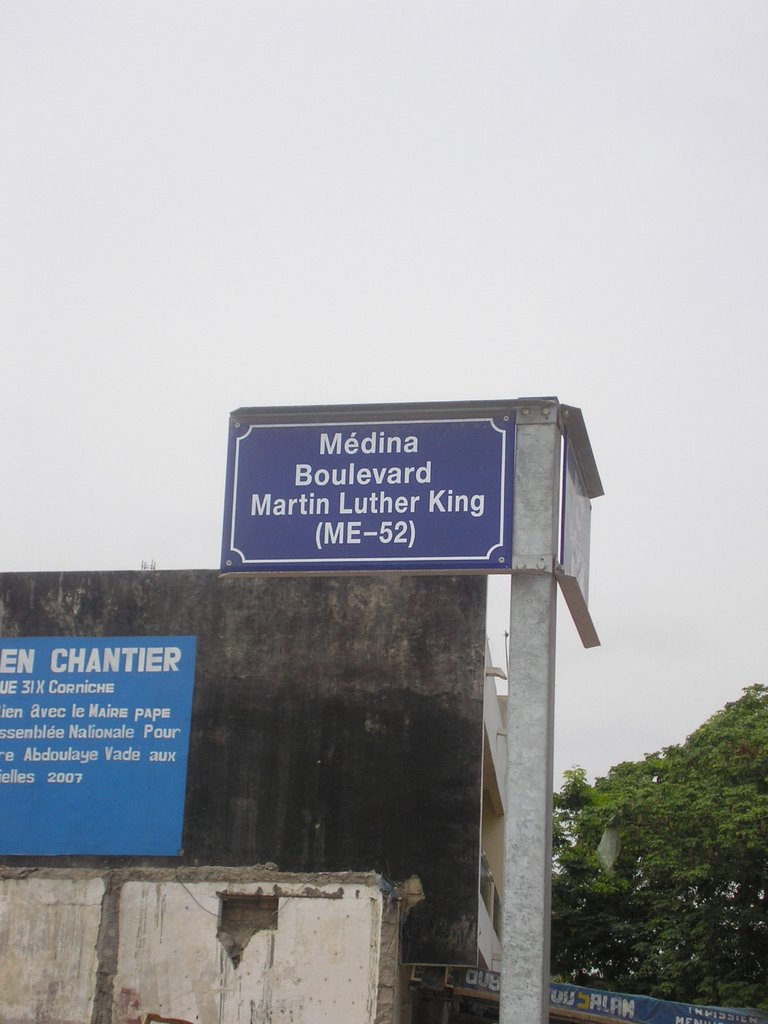
MLK Worldwide


Football Fans

Sunday, August 06, 2006

Big Love

So one of the more interesting things I learned during my recent trip is that polygamy is alive and well in Senegal. Not that I have anything against polygamy necessarily, but it was just interesting being in a place that openly practiced it. I was told that Senegalese law allows for a man to have up to four wives. Aside from the fact that I don't understand why anyone would even want to have four wives, I'm very interested in understanding how the logistics of such a relationship would play out. I met a few married couples in Dakar, but unfortunately, I don't think I met any men that had multiple wives. I understand that the first wife is supreme over any subsequent wives, but beyond that, I don't know how the whole arrangement works. Do they all live together, or do they generally maintain separate residences and the man divides his time accordingly? Are all children equal, or does the preference given to the first wife extend to the children she bears as well? It seems to me that it would be a very complicated and very delicately balanced relationship, but it's likely that they've been practicing polygamy for centuries and have no trouble negotiating all of the potential pitfalls that would be common to novices.

One woman that I met there had been dating a married man for several years. After 9 years of what I would characterize as him stringing her along, she learned that he had made a pact with his wife to refrain from taking another wife despite the aspirations of the woman that I had met, who was hoping to become wife number 2. As the situation stood by the time I left, as relayed to me by my friend, the woman and the married man were actively trying to pursuade the wife to release the husband from his aggreement so that he could take a second wife. What seemed odd to me as a westerner, was not so much that the woman was willing to be wife number 2, but the fact that she was the one most actively pursuing that position. Although she was well aware that she would be playing second fiddle to his first wife for the rest of her life, she had decided that she wanted to be with this man and was determined to convince his wife to allow her into their family. The whole situation seems so opposed to our notions of feminism here in the west. There just seems like there is something inherently wrong with her pursuing such a position of inferiority. However, different cultures have very different rules and norms. Maybe from her point of view, asserting her desire to be with this particular man was her form of self-empowerment. Maybe it's not about the man at all. Maybe marriage to her is simply a tool to gain greater access in society so that she can more easily accomplish her goals in life. Or maybe not. Who knows. I just think it's all very interesting.

Tuesday, July 11, 2006

Dakar: First Impressions

Here wr are: Day 5 of 35 days in Senegal. I'm having a great time so far. Although it may not have been the most financially responsible decision I've ever made in light of the fact that i won't have a job for the next 2 years while i'm in school, this was the perfect ime to come for several reasons. First I have a friend here. In a spectacular coincidence, I learned a few weeks ago that a friend from college not only just graduated from the grad program I'm about to enter, but also won the fellowship that i was granted back in May. As a result of the fellowship, she's interning at the US Embassy here in Dakar and has a whole house to herself in downtown Dakar curtousy of generous tax-paying Americans. So I've been staying with her this week. Having a place to stay has been great of course, but another great part is that she somehow knows so many people here. We've been taken around town and invited to eat in the homes of several Senegalese families just in the few days I've been here. It's been great. That's stuff that I would have not been able to tap into had I been here on my own, which was the original plan.

Secondly, this was the perfect time to come because I don't think I would have been able to appreciate it here had I come before now. Looking back on my time in Austria and China and even as recently as my trip to Japan this spring, i needed those experiences to get me ready for Africa, which is where I've been really wanting to go all along. I believe that some people are born ready to spend time in Africa, some are probably never ready to come to Africa, I just needed some time to learn how to really appreciate life outside of the US before I came. Otherwise, I probably wouldn't have enjoyed being here. But this is still the first week. Let's see how I feel in a month.

So enough about me. Let's talk about dakar. First, the Senegalese are beautiful. Of course, not everyone is gorgeous, but many many are. Both men and women alike. They tend to have tall, slender, naturally toned bodies with absolutley beautiful very dark skin. I find myself going off course following people walking down the street because they're so beautiful and I'm not ready to stop looking at them yet.

The food. The food is so good. The meals seem very simple (fish or chicken, vegetables and rice), but it is so good. Since it's right on the coast, there's an abundance of seafood, and I don't know how they cook it, but it's so very tasty. I just had a whole fish today for lunch and I think I may have another one tomorrow... or maybe even later tonight. This is food at a restaurant that's so good. When we go to someone's home, it's even better.

Contrary to my impressions beforehand, Dakar ain't cheap! Many things are pretty much on par with the US in terms of price. My meal today (fish, rice, a bottle of local beer) cost me about 10 or 11 dollars. The same meal at a comparable restaurant would've probably cost me about 15 or 16 in Baltimore and maybe 20 in San Francisco ( as an aside, SF is expensive, in my opinion). While it's cheaper than the US, it's really not all that cheap. I was expecting China prices, and I was clearly mistaken. Talking to one of my friend's (very wealthy) Senegalese friends, I also learned that real estate in Dakar is very expensive. Maybe more expensive than much of the US. Other things are really cheap, however. For example, my language class is only 200 dollars for 100 hours of instruction (i.e. 2 dollars an hour). The programs I was looking at in France wanted 230-250 dollars a week for about 20 hours of instruction. So some things here are rather pricey, while others are pretty cheap.

Not only is this my first time in Africa, but it's also my first time in a predominately Muslim country. Although I get the impression that Senegal is a rather secular Muslim country (more of what I imagine Turkey to be as opposed to my impression of Saudi Arabia), I find it all pretty interesting. I took the bus home after class today, and on the way home I saw the faithful flooding the streets and outdoor markets as the Grand Mosque emptied after, I presume, the conclusion of Friday afternoon prayers. There were men carrying prayer rugs and beads everywhere. Some were adorned in traditional dress while many just had on a t-shirt and pants. It was pretty cool.

Dakar, not unexpectedly, is very homogenous. I'm sure there are different tribes that make up the population here, but with my untrained american eyes, I just see a lot of black people. I mean, that's great and part of the reason i came here, but still, it's not very unlike Tokyo or Beijing in that regard. Interestingly enough, also not unlike Beijing and Tokyo, the Senegalese can pick me out of a crowd in an instant. Eventhough I feel like I blend in here a lot more than i ever could in Beijing or Tokyo, i'm as much a foreigner to the Senegalese as I was to the Chinese or Japanese. Of course the fact that I don't speak french is a dead giveaway, but i don't even have to open my mouth for people selling stuff on the street to approach me with what little English they have.

Just a few moments ago, I a Senegalese woman tried to pick me up in the internet cafe. Although she broke the ice asking me whether I worked here, she knew good and well that I didn't work here the moment she laid eyes on me. In China there was a very interesting dynamic between Chinese women and foreign men. Many women in China saw the potential to lure a (presumed) wealthy foreigner (which i imagine is common in many developing countries). I'm interested in seeing whether it will be a similar dynamic here in Senegal.

So that's my take on Dakar so far. One other activity of interest that I've taken part in is a trip to the Pink Lake a few days ago. It's literally pink and hella salty! Apparently, there are minerals in the water that provide favorable conditions to a certain type of algae that glistens pink when the sun's rays hit it. But the other cool part is that it's so unbelievably salty that you literally can't help but float. You can't really even swim because almost your entire body is floating on top of the water. It's pretty cool, but if your unfortunate enough to get some water in your mouth or, even worse, in your eyes, the whole experience instantly becomes a lot less enjoyable.